New USCIS Policy Changes How Some Green Card Applications Are Evaluated
U.S. Citizenship and Immigration Services (USCIS) issued a new policy on May 21, 2026, regarding adjustment of status (Form I-485) applications filed from within the United States. The policy gives USCIS greater discretion in certain cases to consider both positive and negative factors when deciding whether to approve an application.
Below is a simple breakdown of what changed, who may be affected, and what you should know.
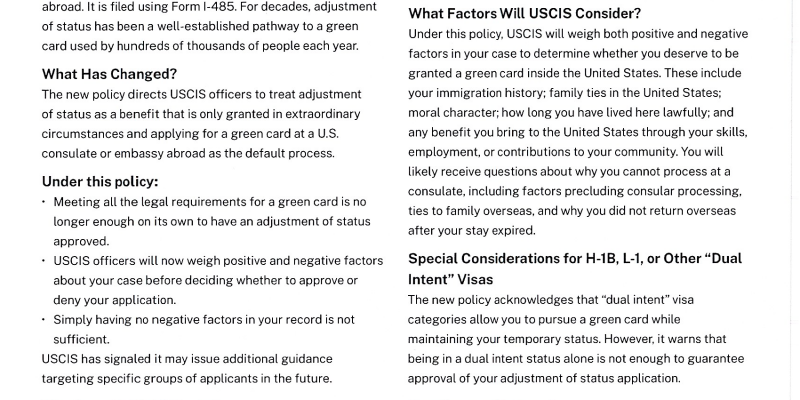
What Has Changed?
Under the new policy:
Meeting the basic requirements for a green card may not, by itself, guarantee approval.
- USCIS may consider the individual circumstances of each case.
- Officers may weigh both positive and negative factors before making a decision.
- USCIS may issue additional guidance for specific groups in the future.
Who May Be Affected?
The policy applies to many family-based, employment-based, and Diversity Visa (U.S. visa lottery) applications for adjustment of status.
Some types of green card applications are treated differently under the policy. These includes certain applications involving:
- Refugees: People who were admitted to the United States as refugees and later apply for a green card.
- NACARA (Nicaraguan Adjustment and Central American Relief Act): A law that provides certain immigration benefits to eligible individuals from Nicaragua, Cuba, El Salvador, Guatemala, and certain other countries.
- HRIFA (Haitian Refugee Immigration Fairness Act): A law that allows certain eligible Haitian nationals to apply for permanent residence.
- LRIF (Liberian Refugee Immigration Fairness): A law that provides a path to permanent residence for certain eligible Liberian nationals.
Whether the policy applies to a particular person depends on their immigration history, the type of application, and their individual circumstances.
What Factors May USCIS Consider?
Depending on the case, USCIS may consider factors such as:
- Immigration history
- Family ties in the United States
- Character and Conduct
- Length of lawful residence
- Education and employment
- Skills and contributions to the community
Applicants may also be asked why they cannot complete immigrant visa processing through a U.S. consulate abroad.
What About H-1B and L-1 Visa Holders?
The policy recognizes that H-1B and L-1 visa holders may pursue permanent residence while maintaining temporary status.
However, having a dual-intent visa does not automatically guarantee approval of an adjustment of status application.
What Should You Know If You’re Affected?
If you have a pending green card (Form I-485) application or are considering applying for adjustment of status, consider speaking with a qualified immigration attorney about how the policy may apply to your circumstances.
Important Note:
This information is for general informational purposes only and is not legal advice. Immigration laws and USCIS policies can change, and every case is different. Consult a qualified immigration attorney for advice about your specific situation.